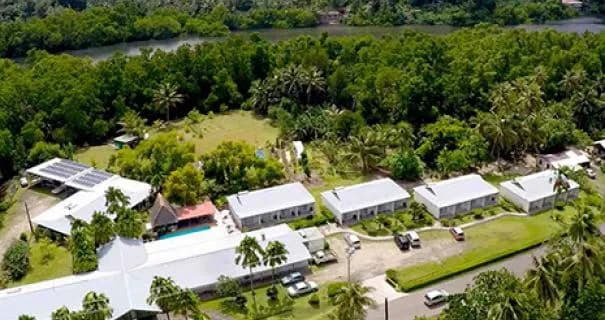
The remote island of Kosrae remains a diving secret, hosting intricate and healthy reefs but very few tourists. It's located 2,960 miles southwest of Honolulu. At only eight miles wide at its furthest points, this small 30% habitable island has been described as an undeveloped Tahiti.
Scuba Dive Level
All Levels
Visibility
100 to 200 feet (30 to 60 meters)
Average Water Temperature
81
Stunning Reefs & Corals
Tropical Fish
The remote island of Kosrae remains a diving secret, hosting intricate and healthy reefs but very few tourists. It's located 2,960 miles southwest of Honolulu. At only eight miles wide at its furthest points, this small 30% habitable island has been described as an undeveloped Tahiti.
Nearly every inch of the sloping benthic environment is draped in an abundant and diverse layer of coral growth. A healthy sprinkling ofanemones provides Kosraes most reliable attraction.
Clownfish and their host anemones can be seen on every dive. The three species most commonly found here include the tomato clownfish (Amphiprion melanopus), Clarks clownfish (Amphiprion clarkii) and pink clownfish (Amphiprion peridaraion). Small reef fish are usually best shot with a macro lens, but the clownfish here are so friendly they make for stunning wide-angle reefscape subjects as well. You can also wander a bit to find a lionfish (Pterois volitans), giant Pacific grouper (Epinephelus lanceolatus) or venture a bit deeper to play with the current-swept crinoids.
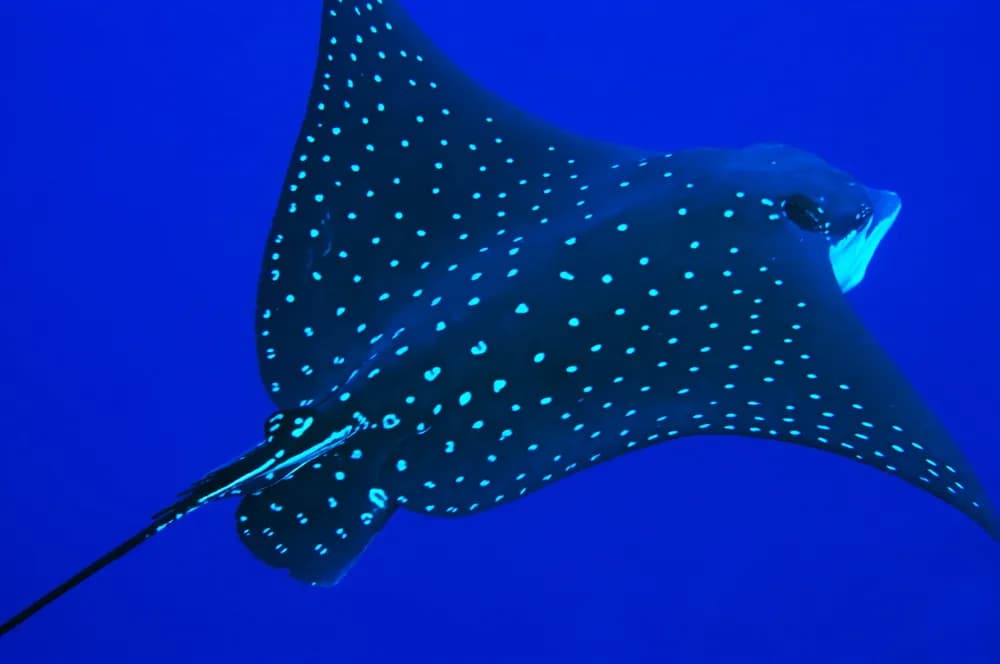
Much of Micronesia is known for bigger animals, and in this aspect, Kosrae is similar. The shallows are patrolled by a vigilant regiment of blacktip reef sharks (Carcharhinus melanopterus) that keep just to the edge of visibility. Sites such as Hiroshi have a high probability of encounters with circling gray reef sharks (Carcharhinus amblyrhynchos) playing in the current. Three species of stingrays and regular turtle sightings round out the larger reef animals. Keep your eyes to the blue, as encounters with larger pelagics like dogtooth tuna (Gymnosarda unicolor) can steal the show.
Visitors from the U.S. usually fly to Kosrae International Airport (KSA) via Honolulu – Daniel K. Inouye International Airport (HNL). Another option is to take a direct flight to Tokyo (NRT or HND) and then travel via Guam – Antonio B. Won Pat International Airport (GUM).
There are dive resorts available in Kosrae, with Kosrae Nautilus being the most popular one.
Diving is done year round, but split to basically two different seasons. June - Oct the currents are typically calmer allowing easier diving, while Nov - May hold stronger currents but higher chances for large pelagics.
Kosrae is a wonderful island for history, culture, and environment. All local activities orient around those three aspects. Either Kayak through the mangrove channels, take aneco-hike through jungles and mountains, or enjoy some of the cultural traditions still practiced today like canoe building, weaving, woodcarving, and farming/fishing.
Explore Kosrae